

Eco-Textile Fun at the Cambridge Foundry’s Winter Festival
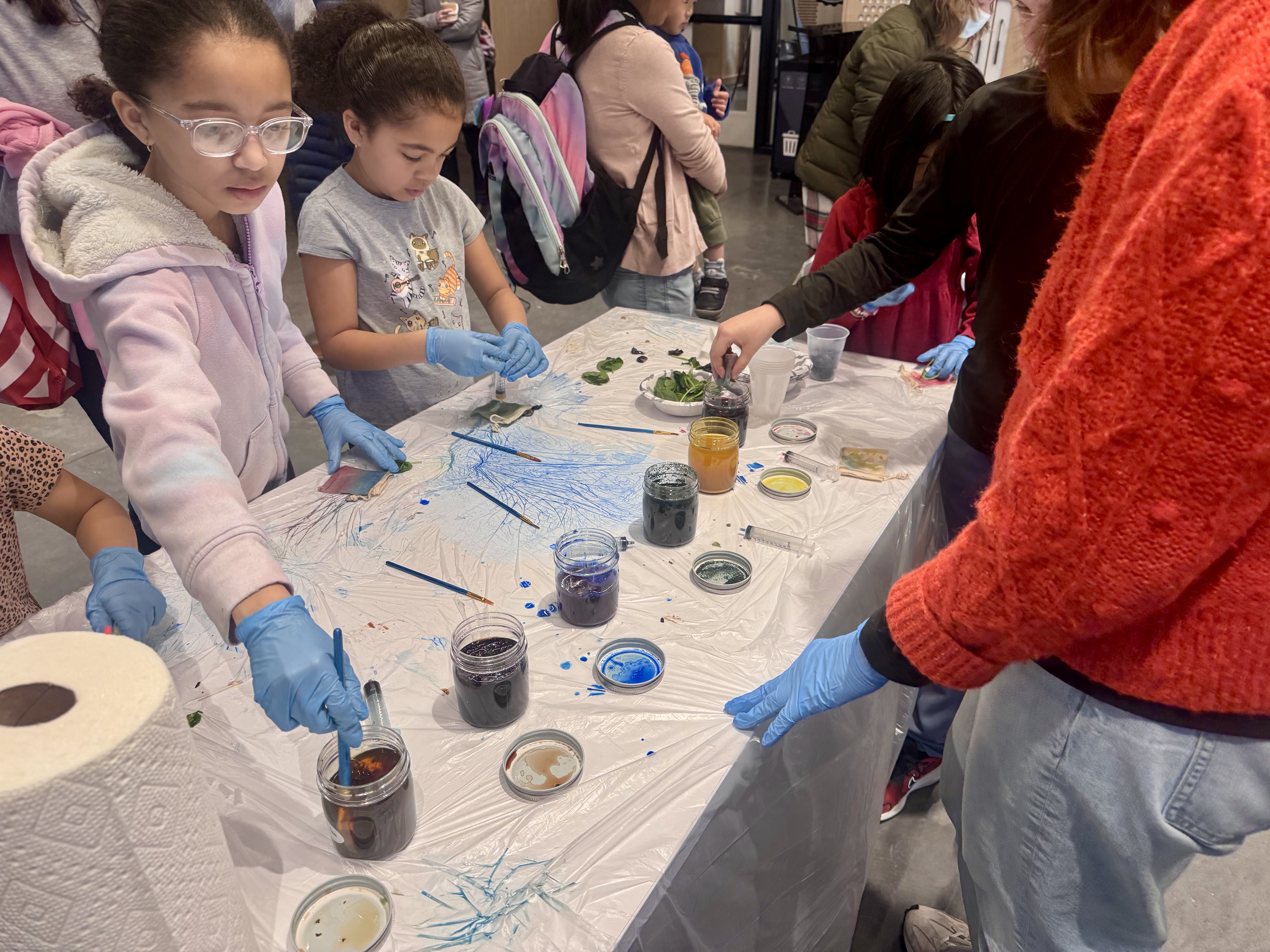
Lemelson-MIT hosted a program at the Foundry’s February Winter Festival during school break. The program was “Eco-Textile Fun” and was based on curricula being developed for a grant awarded by the MIT Day of Climate initiative with a goal to develop climate and sustainability curriculum to pK-12 classrooms.
The fashion industry has a big impact on global carbon emissions and climate change. Dyeing clothes to make colorful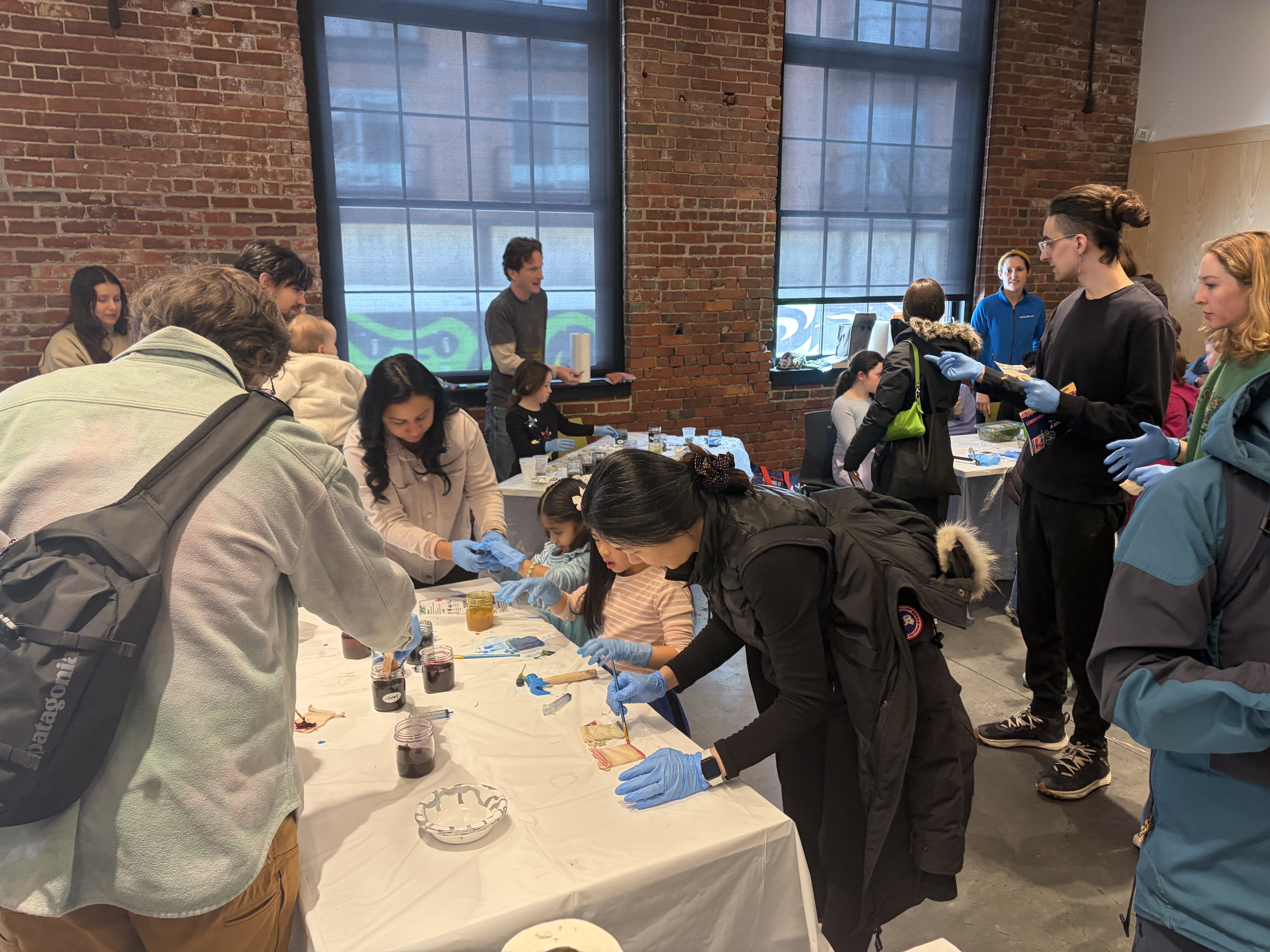 garments uses high energy processes that include intense heat and water usage, synthetic dyes derived from petroleum, and the use of toxic chemicals such as chlorine and formaldehyde. Moreover, the dyeing process often occurs in other countries, adding to transportation emissions.
Eco-textiles are sustainable fabrics colored and patterned using natural materials such as plants, flowers, fruits, and insects instead of synthetic dyes and chemicals.
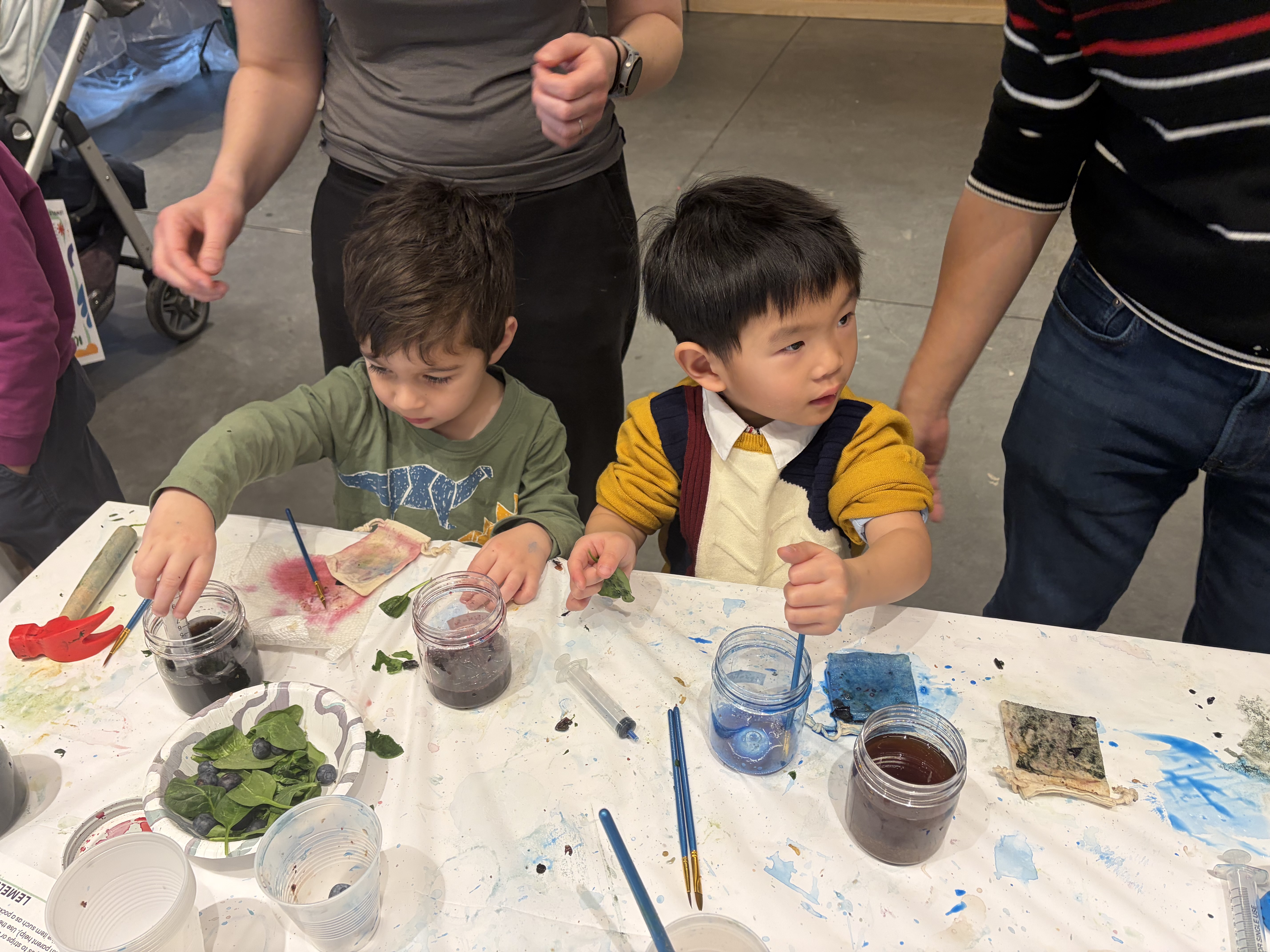
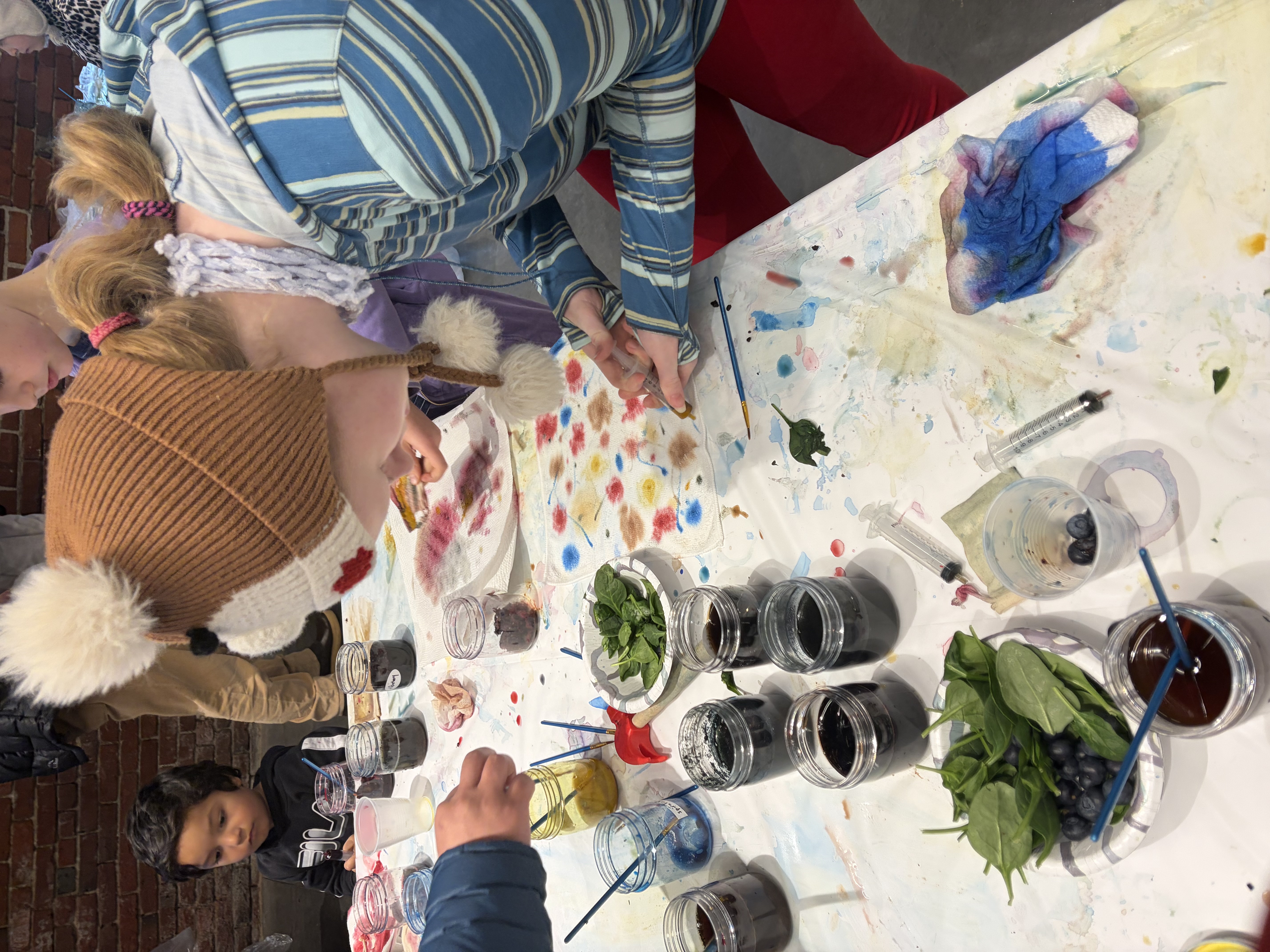
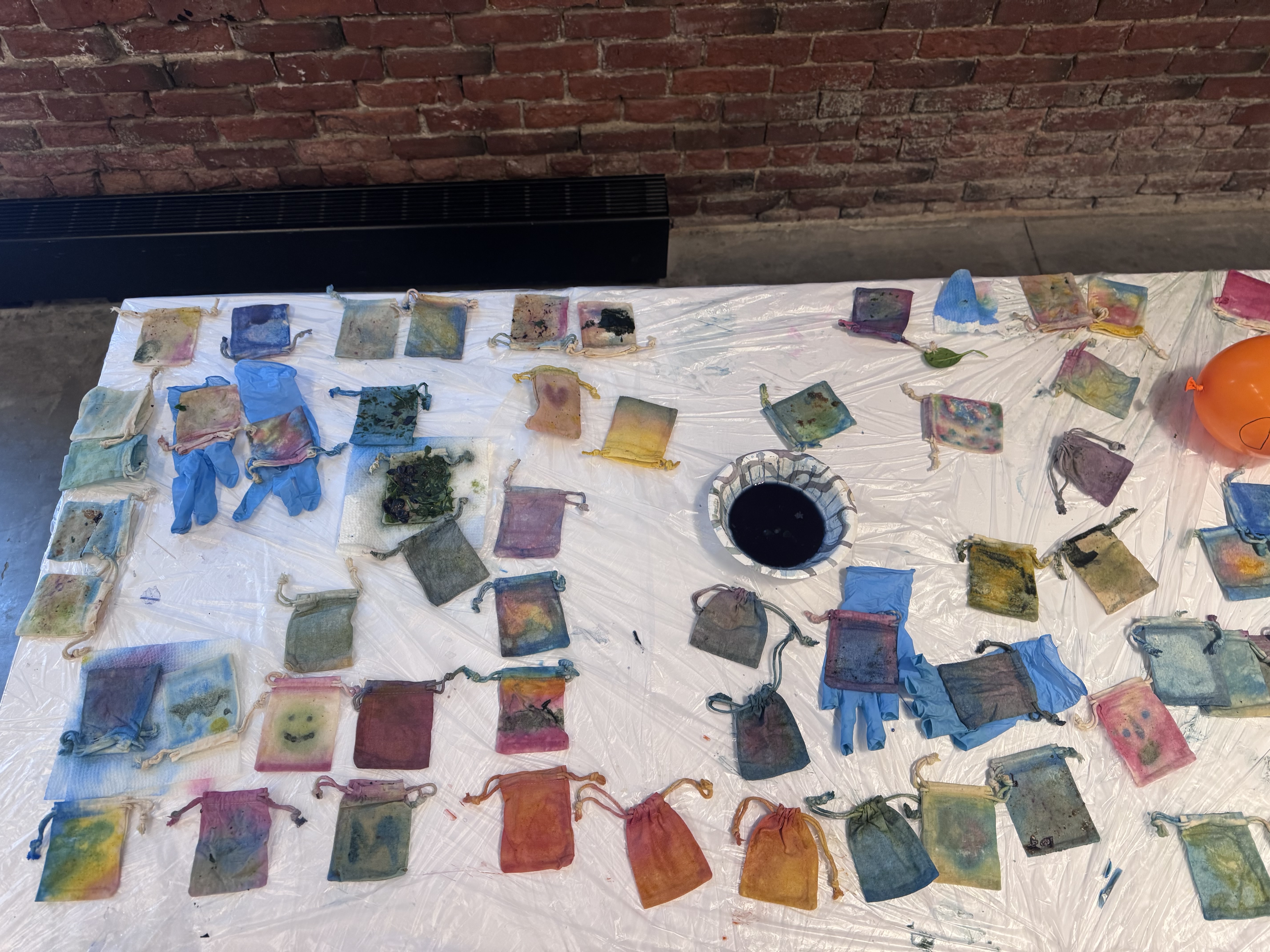
There were over 100 participants, ranging from five years old to young adults. They started with natural cotton 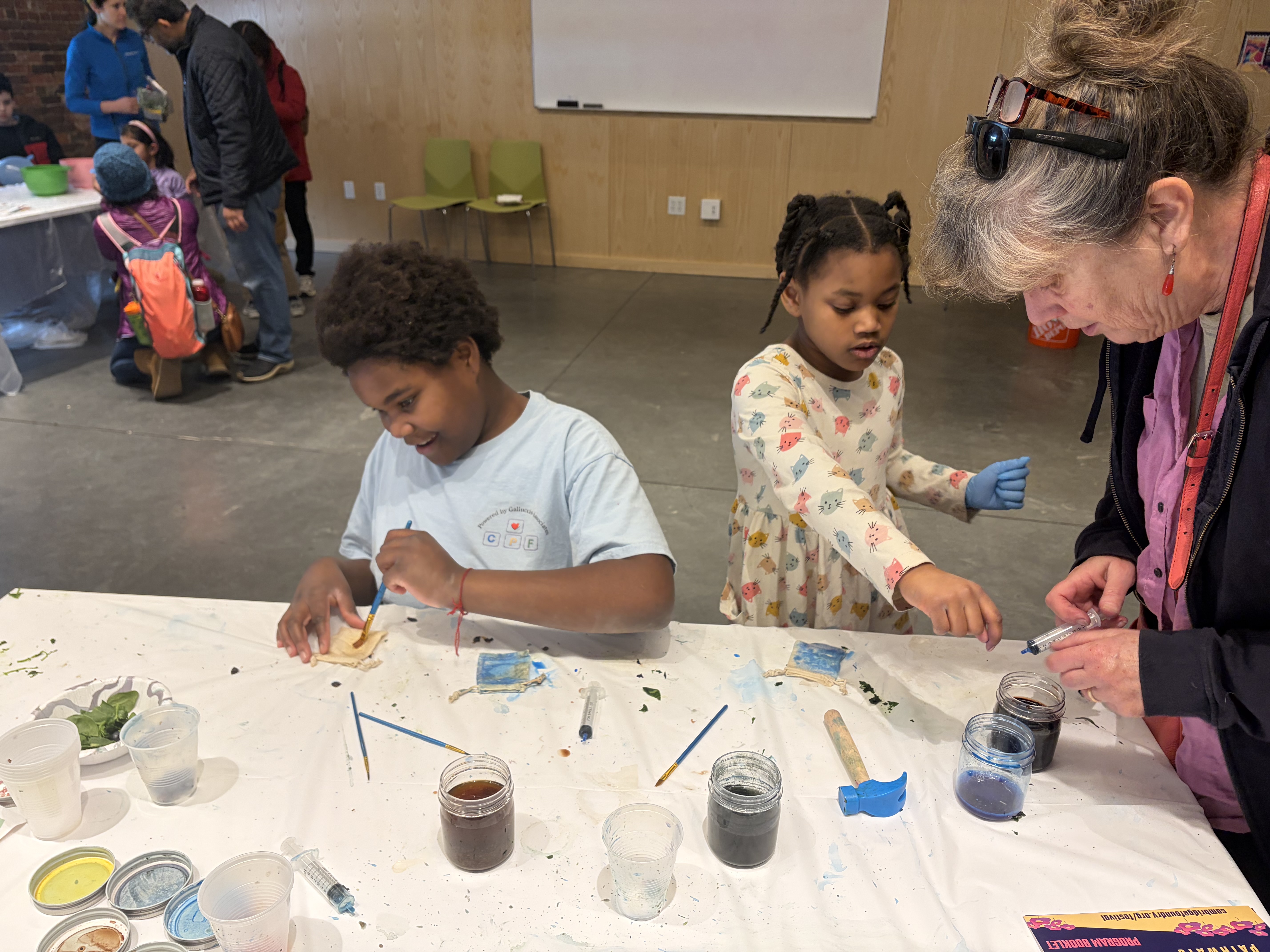 drawstring bags and decorated the bags with their choice of natural dyes and techniques for applying the dyes. The techniques included dipping, brushes, syringes, and even hammering blueberries or spinach directly onto the bags to extract the color. The dyes were developed by Liza Goldstein, author of the curriculum, from beets, tumeric, henna, spinach, spirulina, blueberries, and black tea and coffee to create a wide range of colors. Each creation was a unique, inventive piece and eliminated waste from mass production.
 .
. 
News Categories
Related News
Eco-Textile Fun at the Cambridge Foundry’s Winter Festival
Lemelson-MIT hosted a program at the Foundry’s February Winter Festival during school break. The program was “Eco-Textile Fun” and was based on curricula being developed for a...

Edwin Marrero awarded 2026 MIT Martin Luther King, Jr. Leadership Award
Edwin Marrero, a Lemelson-MIT Invention Education Manager, was presented with the MIT Martin Luther King, Jr. Leadership Award for Staff on February 10, 2026. Presenting the...
LMIT and Haverhill Public Schools receive $400,000 grant from the Massachusetts Clean Energy Center to advance clean energy career pathways for high school
CAMBRIDGE, Mass. — The Lemelson-MIT Program (LMIT), Haverhill High School (HHS), New England Invents (NEI), and a broad network of community collaborators are joining forces...
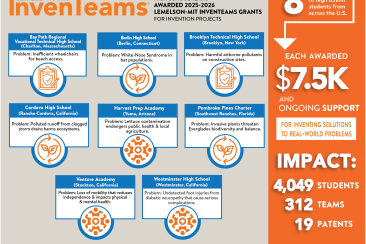
2025-2026 Lemelson-MIT InvenTeams® Announced!
The Lemelson-MIT Program announces the 2025-2026 InvenTeams today. The eight teams of high school students, teachers, and mentors from across the country will each receive $7...


