

The JV InvenTeams Noise Makers activity guide will lead educators and students through creative applications of sound and explore topics such as:
- How inventors solve problems
- Basics of sound waves and electromagnetism
- Designing and building speakers
- Making sound and building an electric pickup
Download the list of materials and tools used in this guide. Most materials and tools are included in the Invention Kit purchase.
Description
Grade level: 6-10
Summary of lesson:
Students will explore sound, speakers, instruments, and electric pickups in this unit. They will build and understand how a speaker and an electric pickup work. They will think about how to use their knowledge of sound to create purposeful and useful inventions.
Time/Duration:
Each unit is designed to be 90 minutes. Teachers break down the lesson based on schedule minutes and available time. Example: 7th-8th grade science teaches 1 unit a week, and he meets 3 days a week, once for 55 minutes and twice for 90 minutes. It depends on deep educators who want to take it.
Topics covered:
Sound Science
Human hearing
Electromagnitism
Speaker technology
Musical Instrument Engineering
Electric Pickups
Prototyping and fabrication
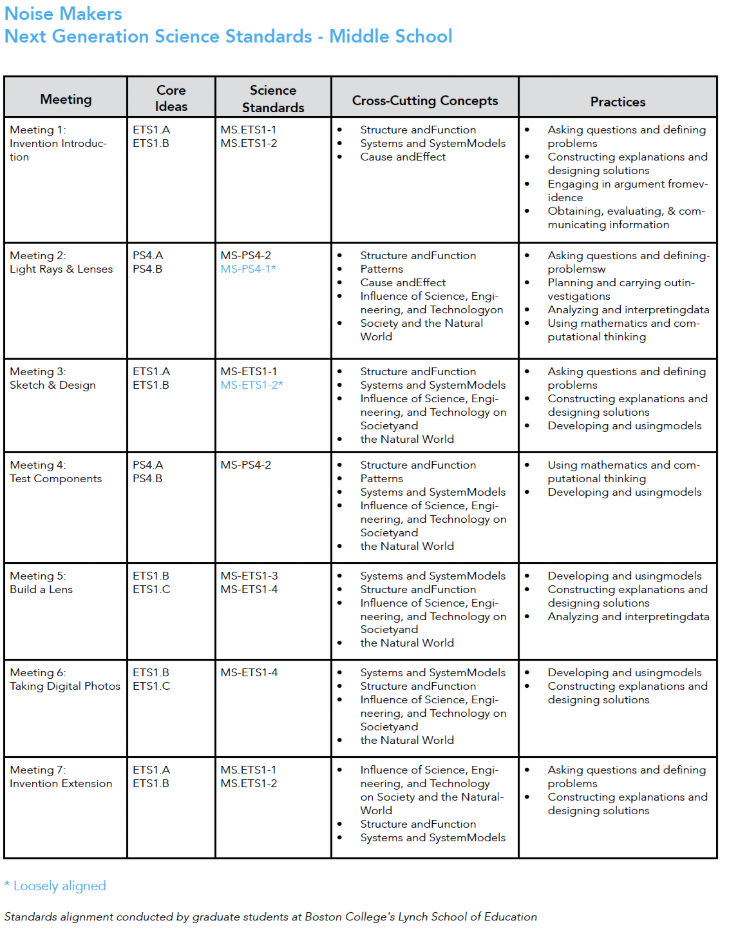
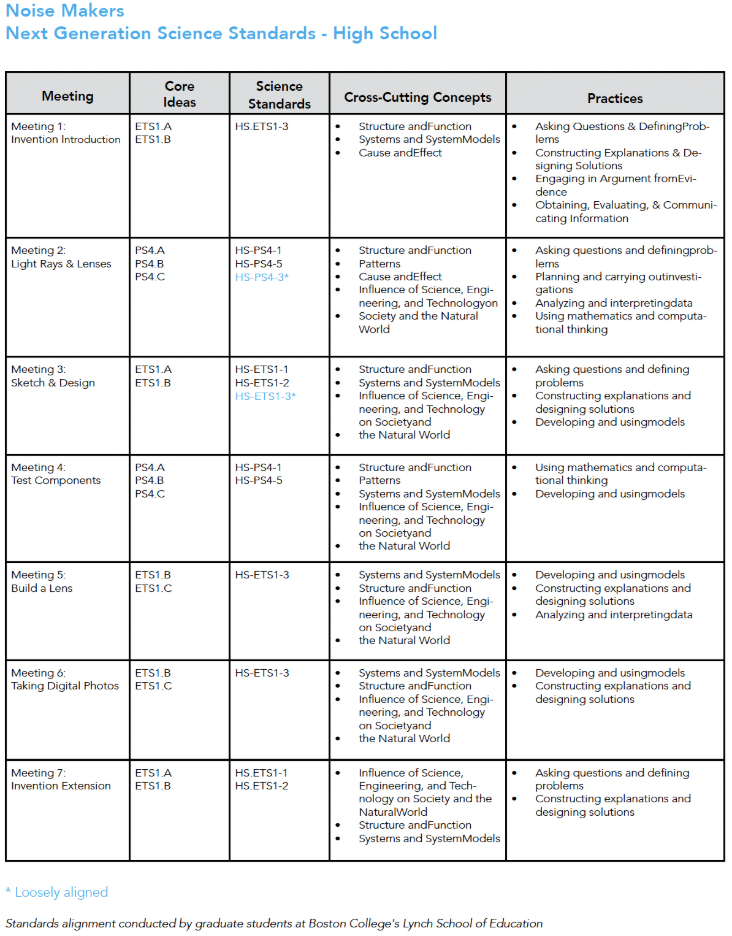
Subject areas/Standards:
Breakdown of lessons:
1. Invention Introduction
Students are introduced to invention and JV InvenTeams. Students complete warm-up activities and discuss invention. Students play “Four Corners” to determine their strengths for team assignments.
2. Hearing Sound
Students brainstorm how they think sound works and are introduced to the basics of sound and human hearing. Students dissect earbuds to find and identify components of a speaker. Students are introduced to speakers and electromagnetism and build their own electromagnet to examine its properties.
3. Build a Paper Speaker
Students use their understanding of speakers to build a paper plate speaker. They then work in groups to refine their speaker according to a goal they select.
4. Making a Sound
Students are introduced to the human larynx and how we make sound through speech. Students apply their knowledge of sound production as they design and build a musical instrument out of everyday materials.
5. Build an Electric Instrument
Students are introduced to electric instruments using the diddley bow as an example. Students build an electric pickup and design a musical instrument to electrify. Students build, test, and refine their electric instruments.
6. Invention Extension
Students display their images in printed form and provide feedback to other teams. Students conceptualize a new purposeful invention that uses lens design, optical principles, and the prototyping process.


