

The JV InvenTeams Electronic Textiles activity guide will lead educators and students through creative applications of circuitry and explore topics such as:
- How inventors solve problems
- Basic circuitry
- Light-up paper designs
- Wearable electronic textiles
Download the list of materials and tools used in this guide. Most materials and tools are included in the Invention Kit purchase
Description
Grade level: 6-10
Summary of lesson:
Students first learn how batteries generate electricity and build their own battery cells using sanded pennies and a vinegar solution. Students also learn about conductors and insulators to guide them toward an understanding of open and closed circuits. They will build simple circuits in their design guides using conductive copper tape and surface-mount LEDs. Students will learn how to handsew for the purpose of using conductive thread in a textile design. Finally, they will create a wearable light-up textile using conductive thread and felt. Students will devise their own invention using electronics in the final meeting.
Time/Duration:
Each unit is designed to be 90 minutes. Teachers break down the lesson based on schedule minutes and available time. Example: 7th-8th grade science teaches 1 unit a week, and he meets 3 days a week, once for 55 minutes and twice for 90 minutes. It depends on deep educators who want to take it.
Learning Principles by Subject Area:
-Design Process
-Electronics
-Circuitry
-Batteries
-Materials
-Hand Sewing
Subject areas/Standards:
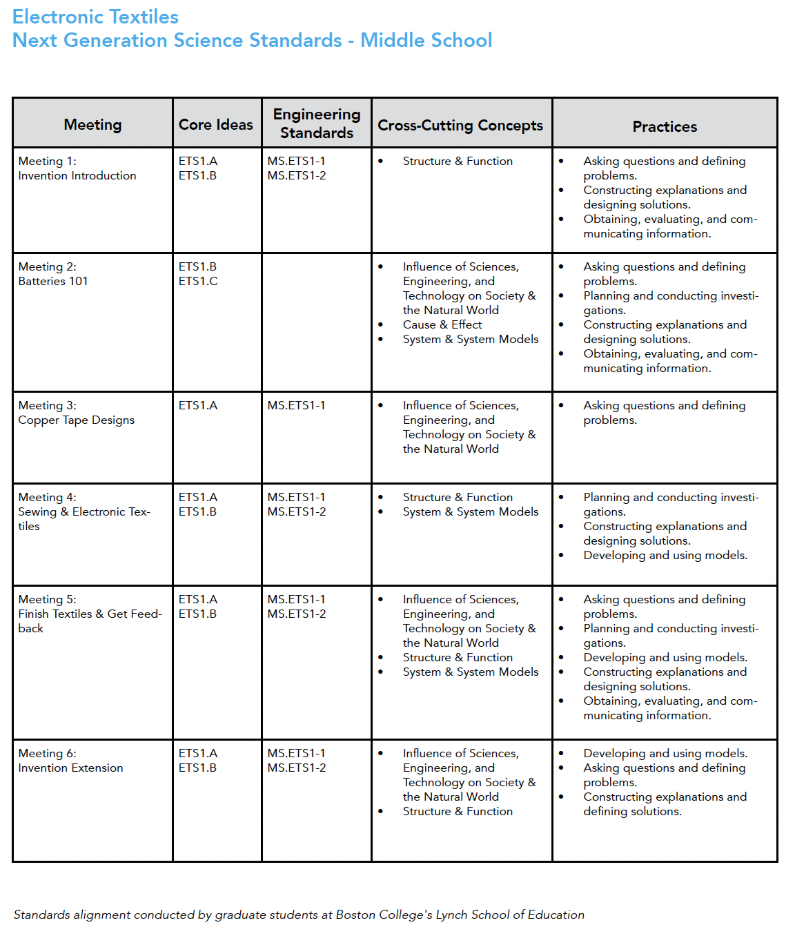
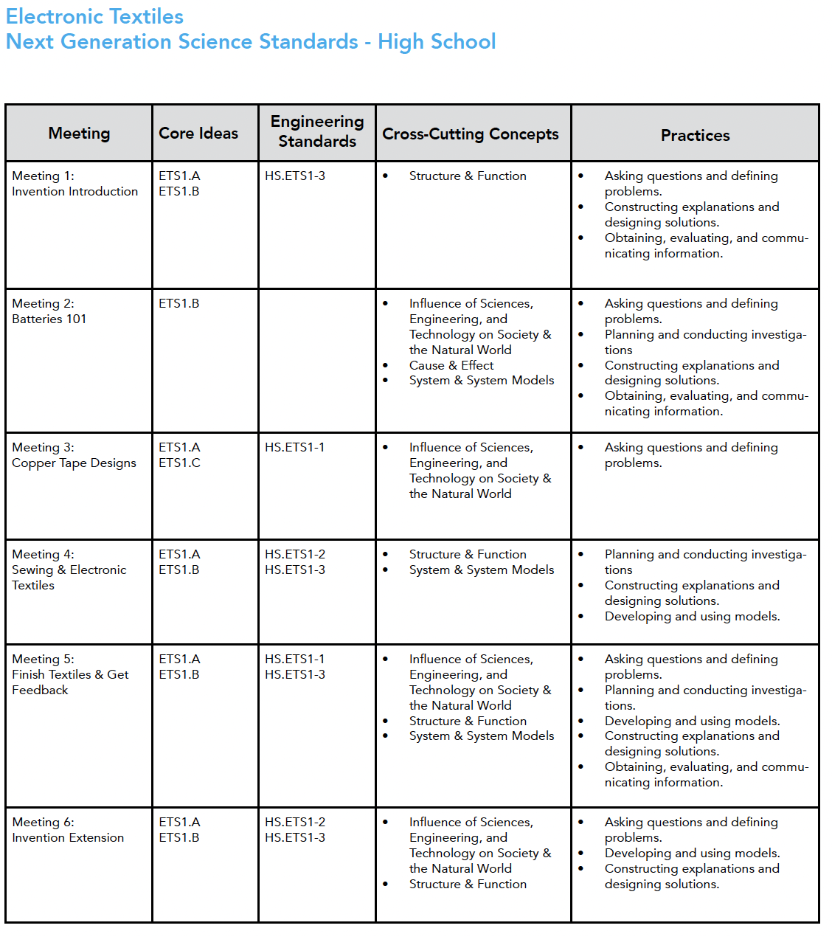
Breakdown of lessons:
1. Invention Introduction
Introduction to invention and JV InvenTeams. Students do warm-up activities and discuss invention. Students play “Four Corners” to help the educator assign diverse teams.
2. Batteries 101
Students learn about batteries and the flow of electricity. They undertake a penny battery project.
3. Copper Tape Designs
Students practice building a simple circuit using copper tape and surface-mount LEDs in their guides.
4. Sewing & Electronic Textile Activity
Students watch a sewing tutorial and practice sewing using thread. They design an electronic
textile project and begin sewing their project.
5. Finish Textiles & Get Feedback
Students continue sewing their electronic textile project. They brainstorm a new invention using
their new skills in the latter half of the meeting. Optional meeting(s) between 4 and 5
Educators can learn how to use Arduino, an open source electronics platform of hardware and software, then they can teach students how to use it.
6. Invention Extension
Students conceptualize a new invention in small teams using minds-on and hands-on skills from this unit.
Materials: Link to List


