From Career Exploration to Hands-On Innovation
On May 7, 2026, Watertown High School students participated in a field trip put on by the High Performance Building Innovators Club where they explored the intersection of clean energy, housing, community planning, and technology through a day of career conversations and experiential learning.
The day began with guest speakers representing a range of organizations and career paths. Sarah Cunningham of Autodesk; Katie Segal of the Environmental League of Massachusetts (ELM); Claire Morehouse and Rebecca George of the Executive Office of Housing and Livable Communities; Meredith Boericke of the Massachusetts Housing Partnership (MHP); and Beverly Craig of the Massachusetts Clean Energy Center shared their professional experiences and perspectives with students. Conversations highlighted how careers develop through different interests, experiences, and opportunities, reinforcing that there is no single path to success after high school. Whether through college, the skilled trades, public service, or an unexpected career journey, students heard firsthand how they can build meaningful futures around their strengths and interests.
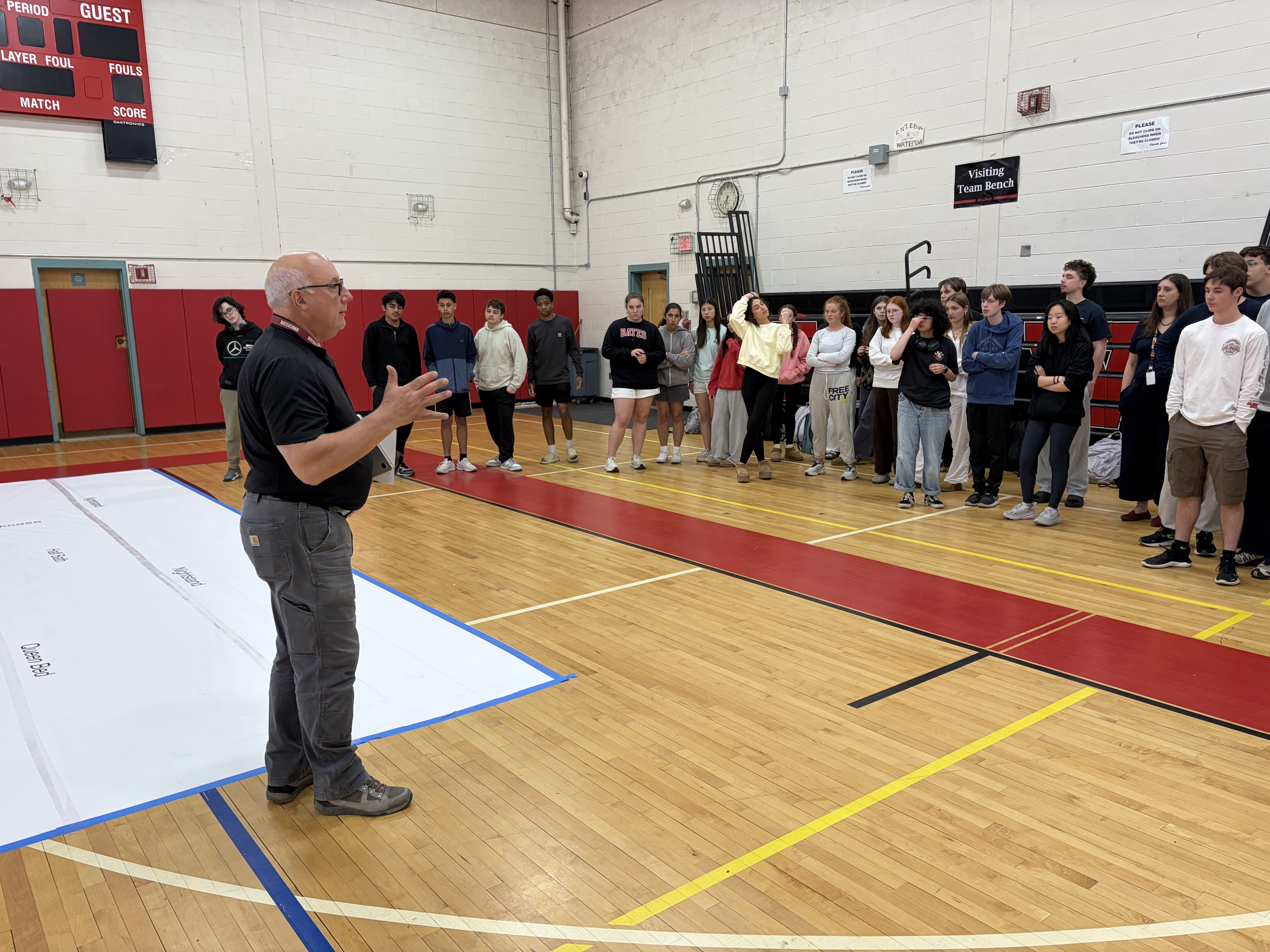
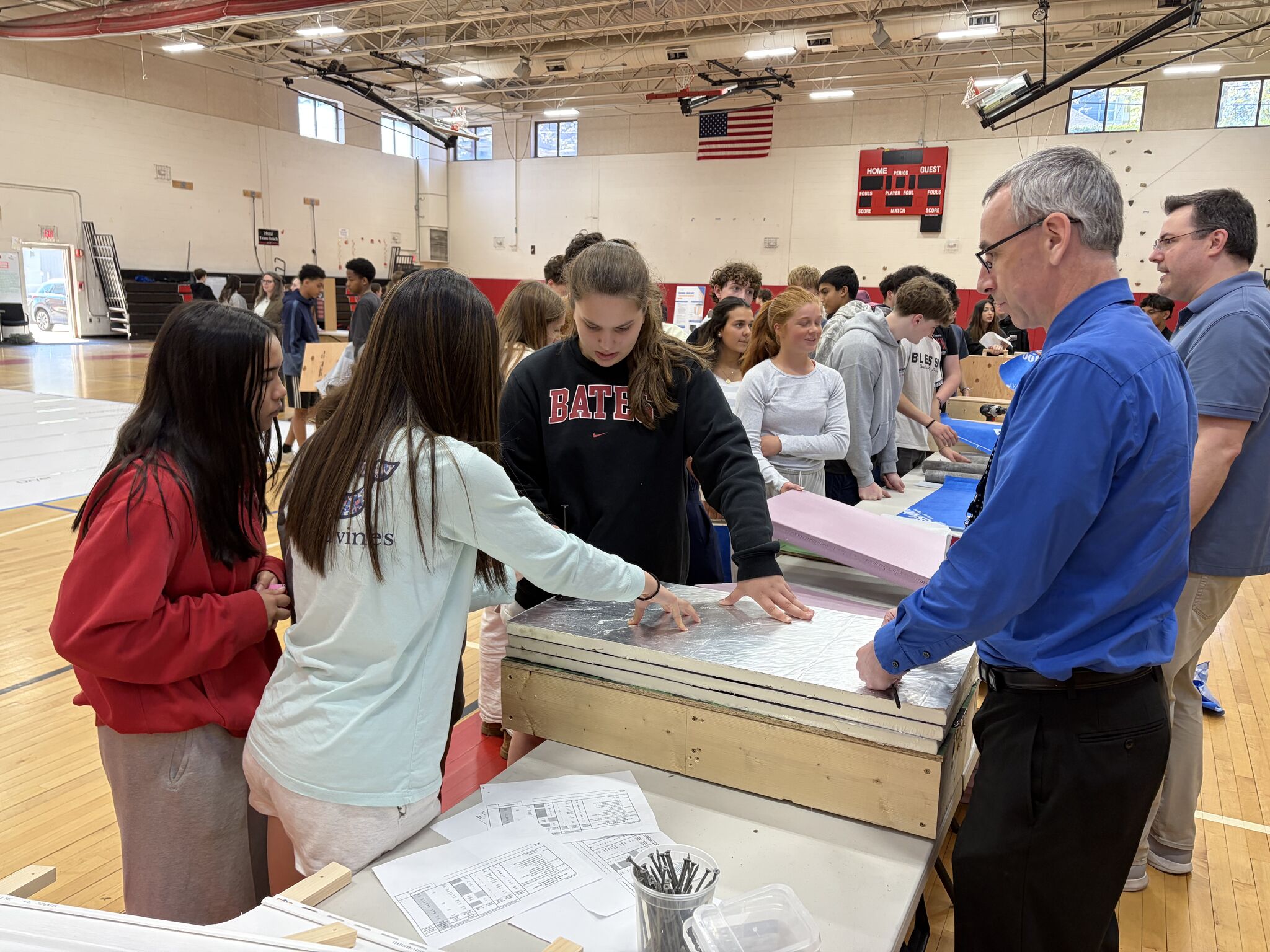
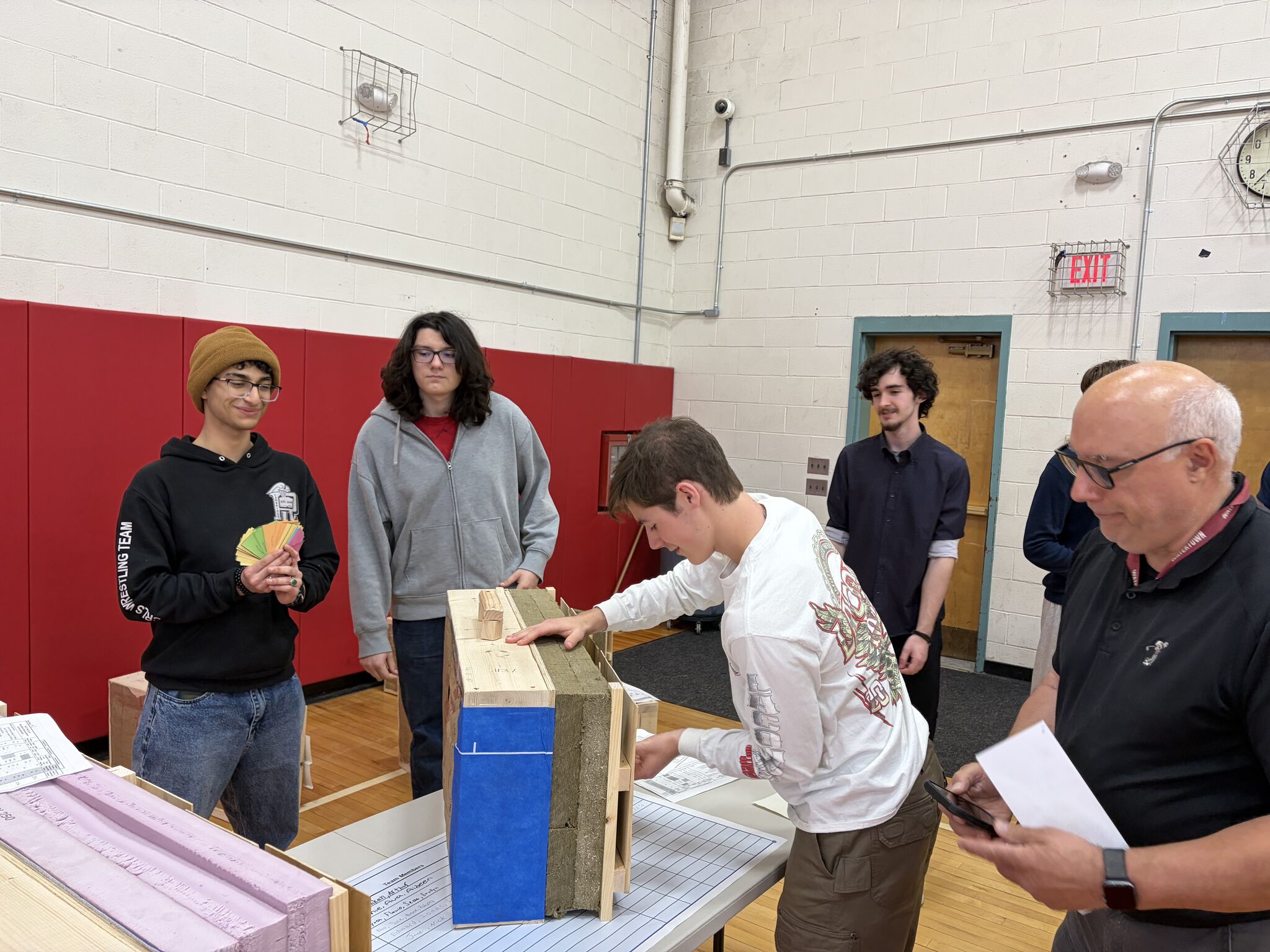
The experience then moved from conversation to hands-on exploration as students investigated the role of Accessory Dwelling Units (ADUs) in addressing housing needs across Massachusetts communities. In an immersive activity, students navigated a full-scale ADU floor plan laid out in the school gymnasium, giving them an opportunity to experience the design and spatial considerations of a real-world housing project. They also learned about sustainable design and energy-conservation measures used in modern construction, connecting high-performance building concepts to the practical challenges of creating more efficient, livable homes.
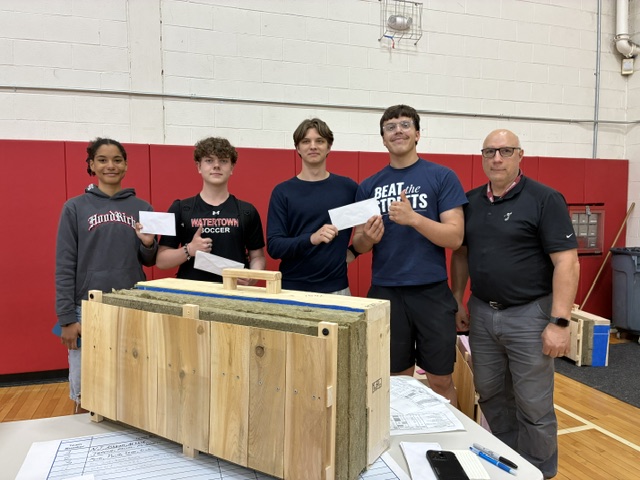
Led by educators Jason Welch, Daniel Birch, and Dean Poillucci, alongside students in the High Performance Building Innovators Club, the activity demonstrated how invention education can bring complex community challenges into a learning environment. By combining professional perspectives with an interactive, real-world design experience, students explored not only how buildings are designed, but also how creativity, technical knowledge, and problem-solving can contribute to more sustainable communities.