

The JV InvenTeams U Control activity guide will lead educators and students through creative applications of mechanical systems and general motor science, exploring learning principles such as:
- Mechanical Systems
- Motor Science
- Electricity and Circuits
- Prototyping
Download the list of materials and tools used in this guide.
Description
Grade level: 6-10
Summary of lesson:
Students will create a mechanical door opener in U Control. They will learn about simple machines and how engineers integrate them into mechanical systems in new, inventive ways. Students will think about existing mechanical and automatic door opener designs and consider the users and needs these designs meet. Students will consider new users and new designs to fit their needs. Students will cut and assemble a door out of foam insulation board. They will then learn about motors and motor control in Meetings 4 and 5. They will understand what a circuit
is, and how to create a circuit using a breadboard to control a motor’s motion. Finally, they will construct their mechanical door opener by attaching the motor, the breadboard, and the control
arms to the door to make the door opener. They will consider improvements on the design as part of the prototyping process.
Time/Duration:
Each unit is designed to be 90 minutes. Teachers break down the lesson based on schedule minutes and available time. Example: 7th-8th grade science teaches 1 unit a week, and he meets 3 days a week, once for 55 minutes and twice for 90 minutes. It depends on deep educators who want to take it.
Learning Principles by Subject Area:
-Mechanical Systems
-Motor Science
-Electricity and Circuits
-Prototyping
Subject areas/Standards:
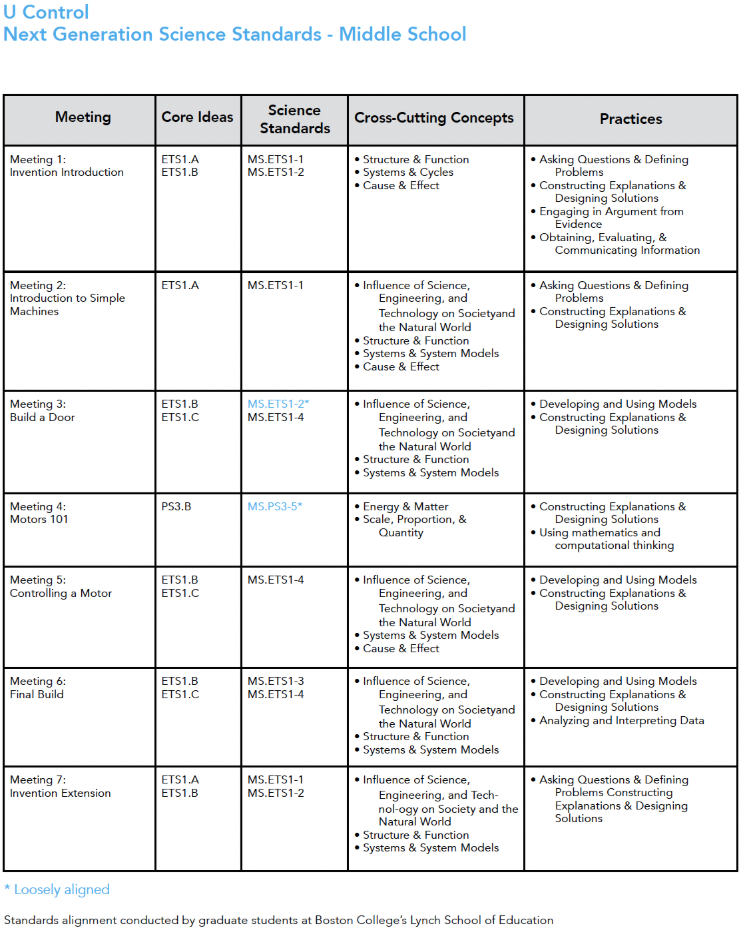
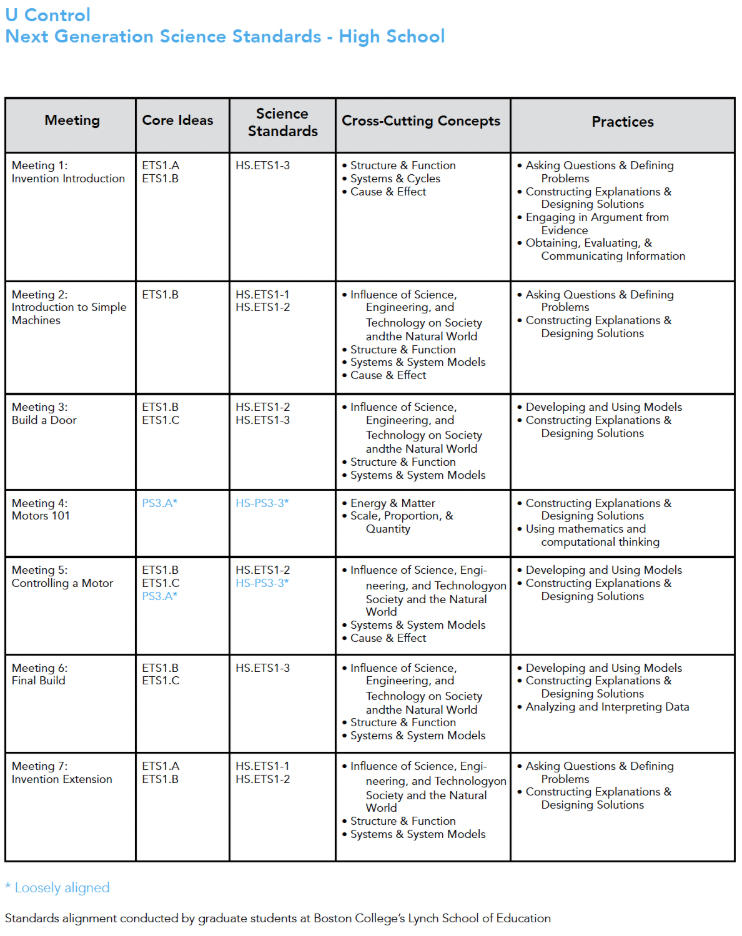
Breakdown of lessons:
1. Invention Introduction
Students do warm-up activities and discuss invention. Students play “Four Corners” to help the educator assign diverse teams.
2. Introduction to Simple Machines
Students learn about the three main types of mechanized door openers and how they work to fill users’ needs. Students complete problem/ solution charts to develop an understanding of the design process in invention.
3. Build a Door
Students demonstrate an understanding of screws as simple machines and what foam insulation board is. Students learn how to use a utility knife to safely cut foam insulation board.
4. Motors 101
Students demonstrate an understanding of the basic types of motors. They can identify the basic parts of a DC motor and explain how they operate. Students know how to read and interpret a motor specification sheet.
5. Controlling a Motor
Students demonstrate an understanding of the devices used to control the motion of a motor, including H bridge motor drivers, switches, and breadboards. Students successfully breadboard
a servo motor to a switch to control the motor’s motion.
6. Final Build
Students use their knowledge of materials, building, and mechanical systems to brainstorm ideas for a prototype.
7. Invention Extension
Students conceptualize a purposeful invention that uses their new minds-on and hands-on skills from U Control.


